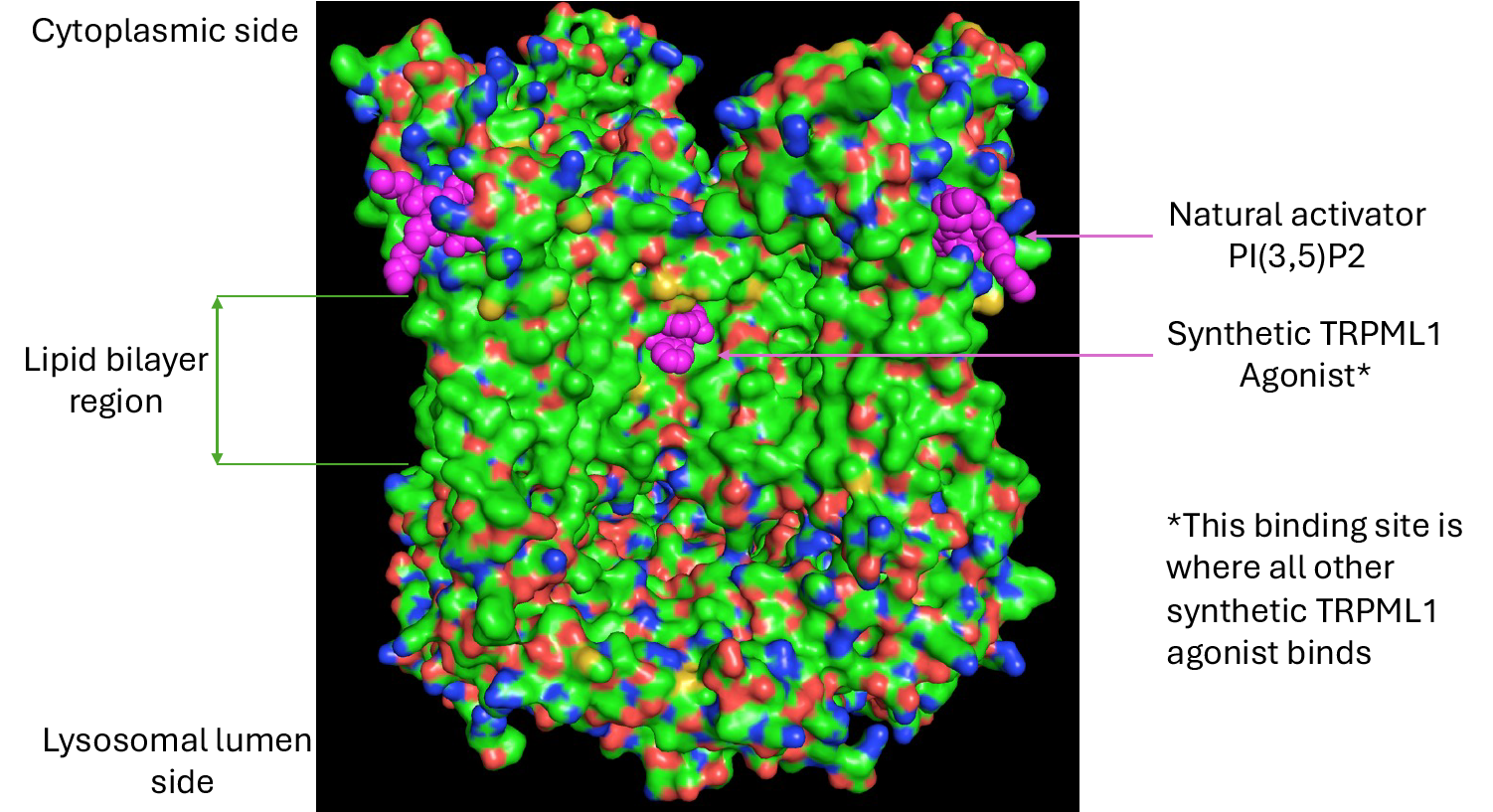
Cambridge, MA, September 14, 2026 – Lysoway Therapeutics, a clinical-stage biotechnology company pioneering therapeutics targeting lysosomal ion channels for age-related neurodegenerative diseases, today announced the publication of preclinical data evaluating its lead candidate, LW-1017, in Scientific Reports, a journal from Nature Portfolio.
The paper, titled “A brain-penetrant TRPML1 agonist enhances autophagy–lysosomal function and mitigates pathology in aged models of Parkinson’s and Alzheimer’s diseases,” details the preclinical pharmacological characterization of LW-1017—a novel, potent, and highly brain-penetrant small-molecule agonist of transient receptor potential mucolipin-1 (TRPML1).
Key findings published in the manuscript include:
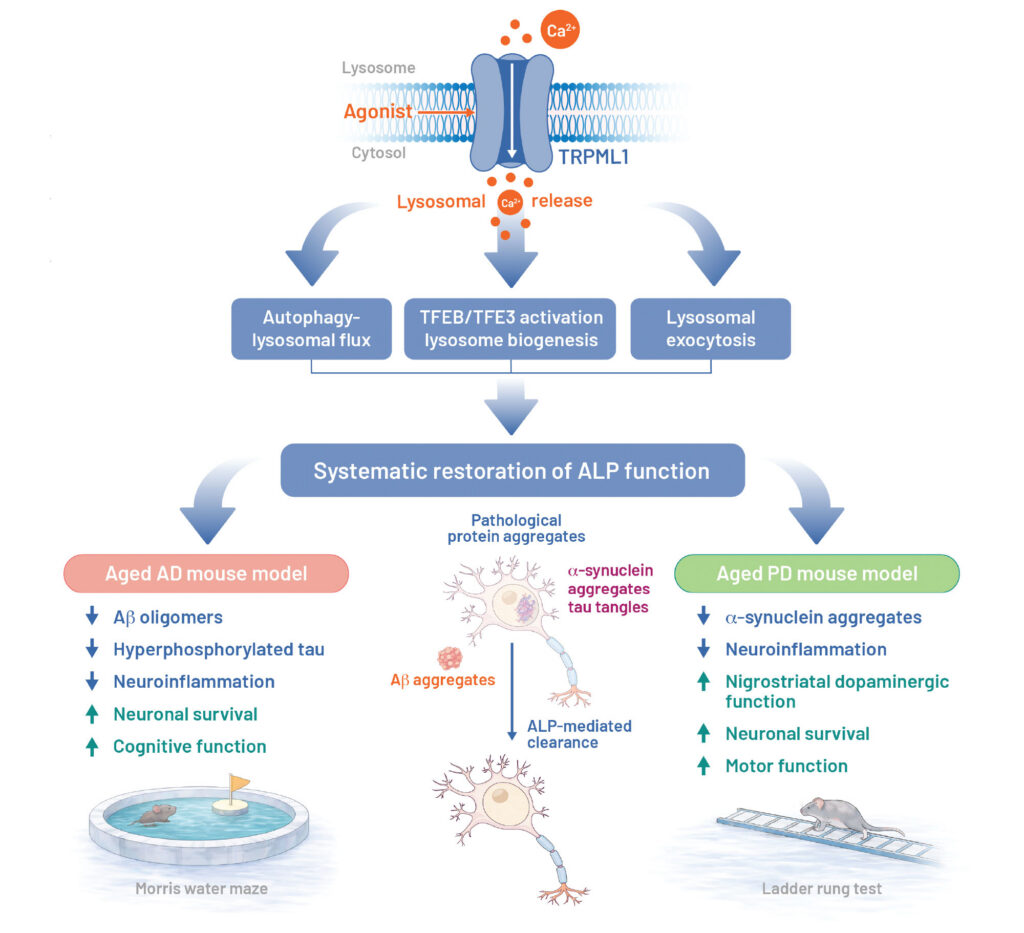
- Potent, Selective Activation of TRPML1: LW-1017 activated TRPML1 with nanomolar potency, driving nuclear translocation of TFEB/TFE3/MiTF and induction of the CLEAR gene network — effects abolished in TRPML1-deficient cells, confirming on-target activity.
- Brain Exposure Sufficient for Central Target Engagement: Oral dosing achieved robust brain exposure and sustained modulation of autophagy–lysosomal biomarkers in vivo, demonstrating adequate central target engagement across the dose range tested.
- Dual-Disease Pathology Reduction in Aged Models: In aged Parkinson’s models, LW-1017 reduced pathological α-synuclein, preserved dopaminergic neurons, and improved motor function. In aged Alzheimer’s models, it reduced amyloid and tau pathology, decreased neuroinflammation, and improved cognition.
“This study provides the first in vivo evidence that pharmacological activation of TRPML1 restores autophagy–lysosomal function and produces coordinated molecular, cellular, and functional benefits in aged models of both Parkinson’s and Alzheimer’s diseases,” said Yongchang Qiu, Ph.D., Founder and Chief Executive Officer of Lysoway Therapeutics. “LW-1017 achieved robust, sustained central target engagement at oral doses as low as 3 mg/kg — notably, in a head-to-head test at 30 mg/kg, a less brain-penetrant but equally potent comparator failed to match the same level of benefit, underscoring that high brain penetrance is not only critical for giving us an adequate safety margin, since TRPML1 is expressed throughout the body — but also important for in vivo efficacy.”
LW-1017 is currently being evaluated in a Phase I single ascending dose (SAD) and multiple ascending dose (MAD) clinical trial in healthy volunteers to assess its safety, tolerability, and pharmacokinetics.
The full open-access publication is available on the Scientific Reports website at: https://www.nature.com/articles/s41598-026-71201-1
This research was supported in part by grants from the Michael J. Fox Foundation for Parkinson’s Research and The Silverstein Foundation for Parkinson’s with GBA.
About Lysoway Therapeutics
Lysoway Therapeutics is a biotechnology company pioneering therapeutics targeting lysosomal ion channels for age-related neurodegenerative diseases. Leveraging structure-based drug design, high-resolution cryo-EM, and proprietary insights into lysosomal biology, Lysoway is developing highly brain-penetrant small-molecule modulators of TRPML1 and TMEM175 designed to restore autophagy–lysosomal function and cellular homeostasis.
Forward-Looking Statements
This press release contains forward-looking statements regarding the development, clinical progress, therapeutic potential, and anticipated timing of LW-1017 and other product candidates. Actual results may differ materially from those expressed or implied by these forward-looking statements due to risks and uncertainties inherent in drug development and clinical research.
Contact Info
info@lysoway.com
www.lysoway.com
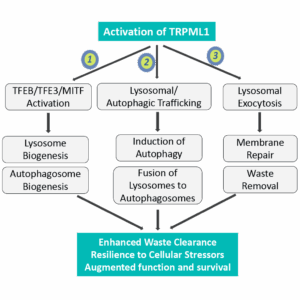 Figure 1.