Our Approach
Restoring cellular health through lysosomal ion-channel modulation
Age-related neurodegenerative diseases share a common upstream defect: the gradual breakdown of the autophagy–lysosomal system, the cell’s core machinery for clearing toxic proteins, maintaining ion balance, and supporting continuous repair. When this system falters—as seen in Alzheimer’s, Parkinson’s, ALS, FTD, and many lysosomal disorders—cells accumulate waste, lose resilience, and eventually degenerate.
Lysoway targets this root cause by modulating lysosomal ion channels such as TRPML1 and TMEM175, master regulators of lysosomal function. Unlike antibody-based or anti-inflammatory therapies that act downstream by targeting individual protein species or inflammatory signals, our small-molecule approach focuses on restoring the lysosome’s intrinsic ability to clear and recycle damaged material. Reactivating ion-channel activity revitalizes autophagic flux, normalizes lysosomal homeostasis, and stabilizes multiple cellular pathways simultaneously.
By repairing the cell’s fundamental cleanup and quality-control processes, our ion-channel modulators have the potential to deliver broad, durable, and truly disease-modifying benefits across neurodegenerative and lysosomal disorders.

Lysosomal Ion Channels:
Ideal Targets to Restore Autophagy–Lysosomal Function in Neurodegenerative Disorders
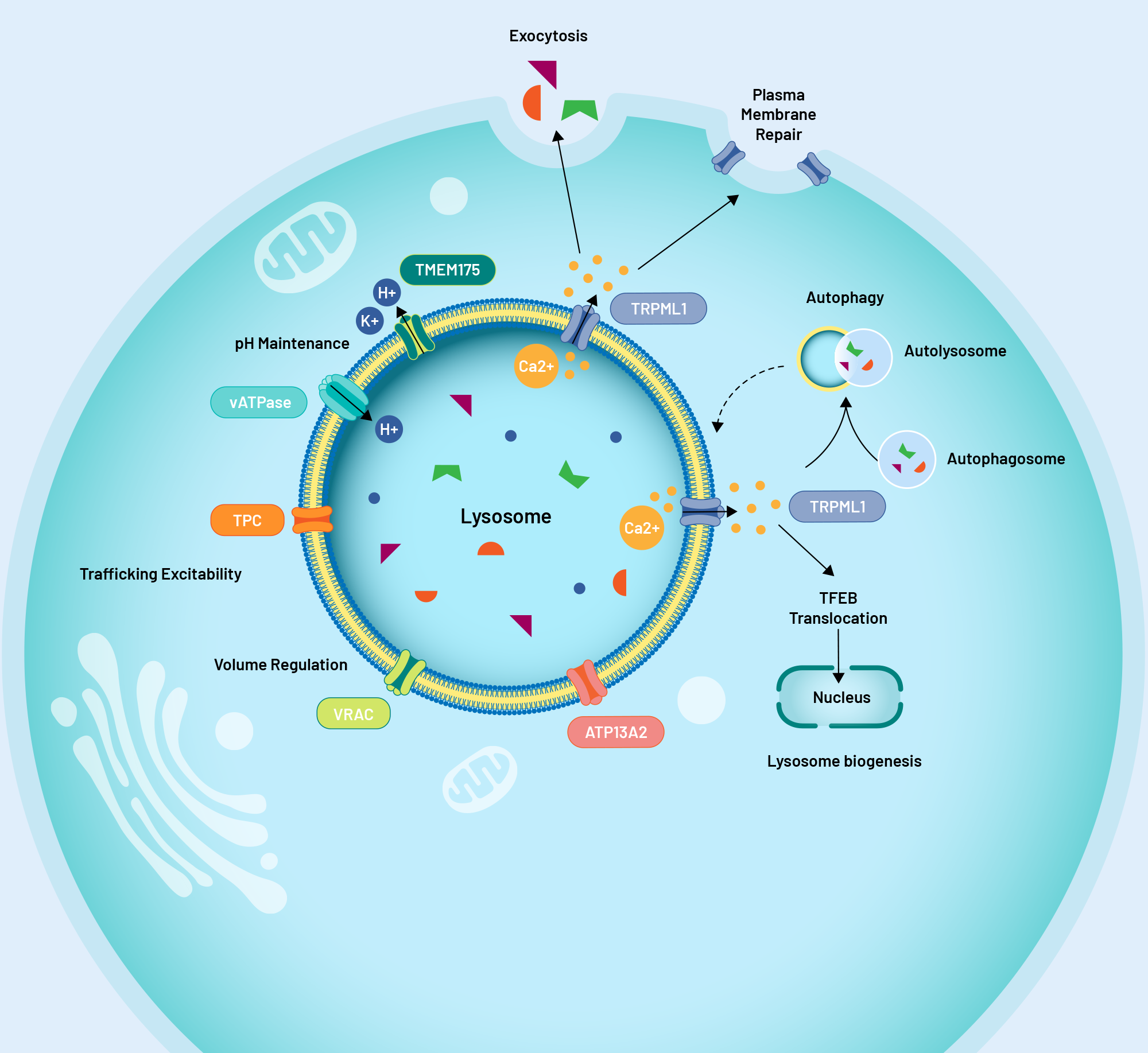
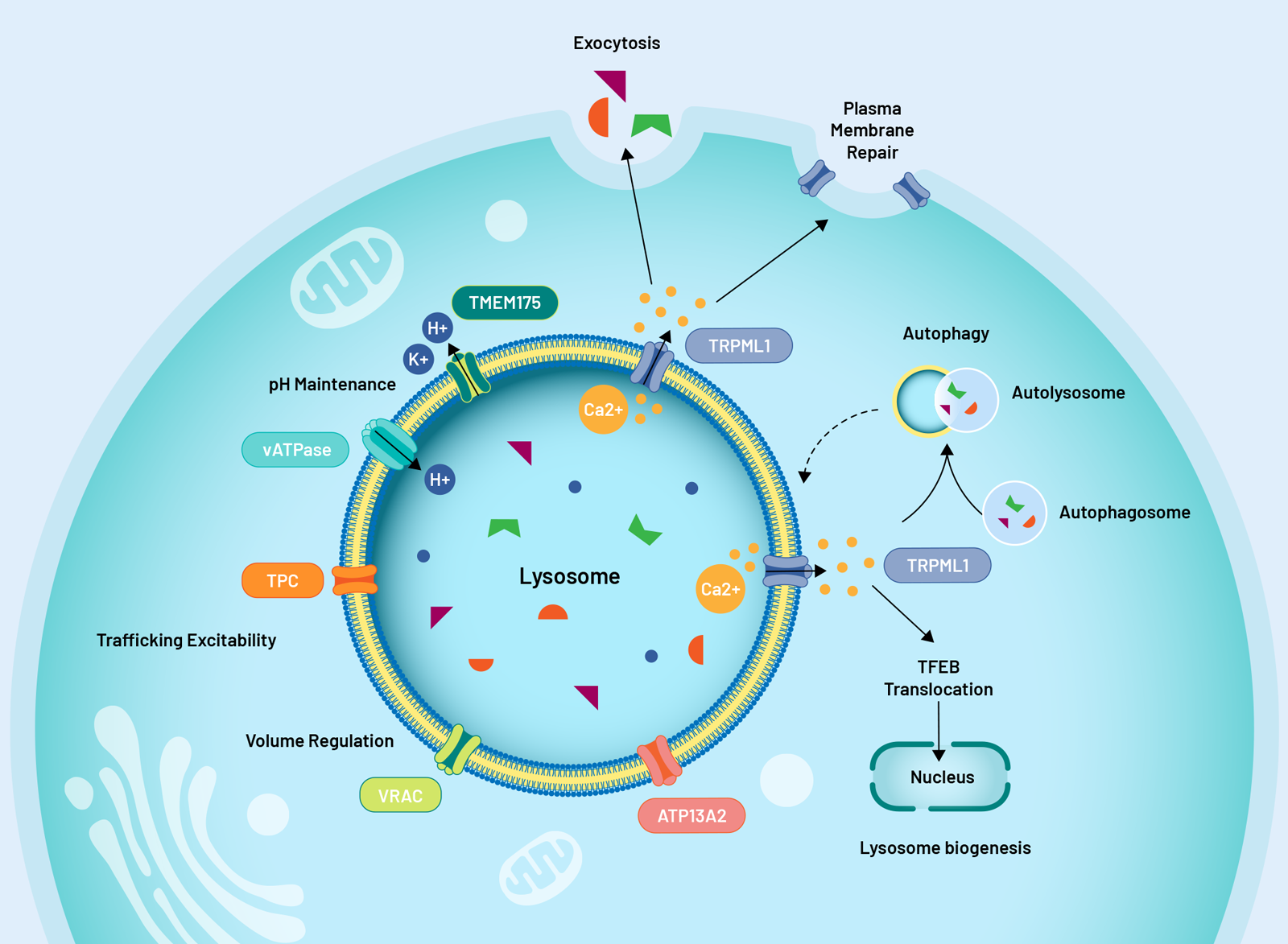
Normal functions of critical lysosomal ion channels are often disrupted due to either genetic defect or inhibition by accumulated cellular waste material, which in turn results in lysosomal functional deficiency, a trademark observation in a number of neurodegenerative diseases and metabolic disorders. Activation or inhibition of ion channels via small molecule agents can help restore lysosomal function, which can then better regulate critical downstream processes (including autophagic flux and resolution, exocytosis, plasma membrane repair, and lysosomal biogenesis) to provide therapeutic benefit to patients.
Our Pipeline
Synergistic Programs To Address Multiple Distinct Lysosomal/Autophagy Deficiencies

TRPML1
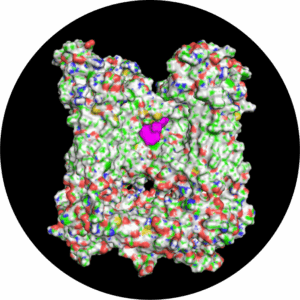
TRPML1 (Transient Receptor Potential Mucolipin-1) is a master regulator of lysosomal calcium release, trafficking, membrane repair, and autophagy resolution. Genetic and functional studies show that TRPML1 activity is diminished across multiple age-related neurodegenerative diseases.
Lysoway has developed highly brain-penetrant, potent small-molecule TRPML1 agonists that directly restore this impaired signaling. By re-establishing proper lysosomal function, our molecules enhance the degradation of harmful protein and lipid aggregates, damaged organelles—helping neurons clear the stressors that accumulate with age and disease. This upstream, systems-level mechanism offers broad applicability across CNS disorders and represents a fundamentally different approach to treating neurodegeneration.
TMEM175
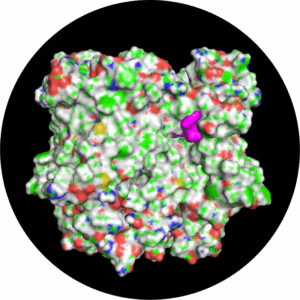
TMEM175 is a lysosomal ion channel that maintains lysosomal membrane potential, pH balance, and enzymatic competence—functions that are essential for effective autophagy and substrate degradation. Loss-of-function variants in TMEM175 represent one of the strongest and most reproducible genetic risk factors for Parkinson’s disease, linking impaired TMEM175 activity to disrupted lysosomal physiology, α-synuclein accumulation, and dopaminergic neuron vulnerability.
Lysoway has developed highly brain-penetrant, potent small-molecule TMEM175 agonists that directly restore this deficient channel activity. By re-establishing lysosomal ion homeostasis and improving degradative capacity, our molecules enhance clearance of pathogenic substrates central to PD progression. TMEM175 agonism offers a genetically validated, upstream mechanism tailored specifically for Parkinson’s disease, complementing Lysoway’s broader lysosomal restoration platform.